Frances Hatch
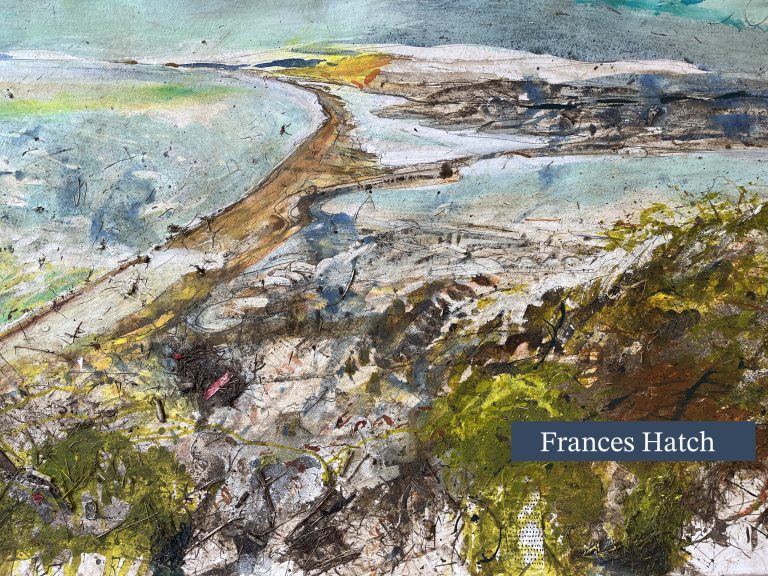
Earlier in the year we were down in Bridport, Dorset and went to the wonderful Bridport Arts Center (amazing cafe, highly recommended) and we also happened to catch the exhibition by Frances Hatch which I’d like to share here as her way of working is so inspiring.
Frances Hatch @Bridport Arts
With a long career as a plein-air painter, Frances takes immersive environment to a level I’d not seen before in painting work.
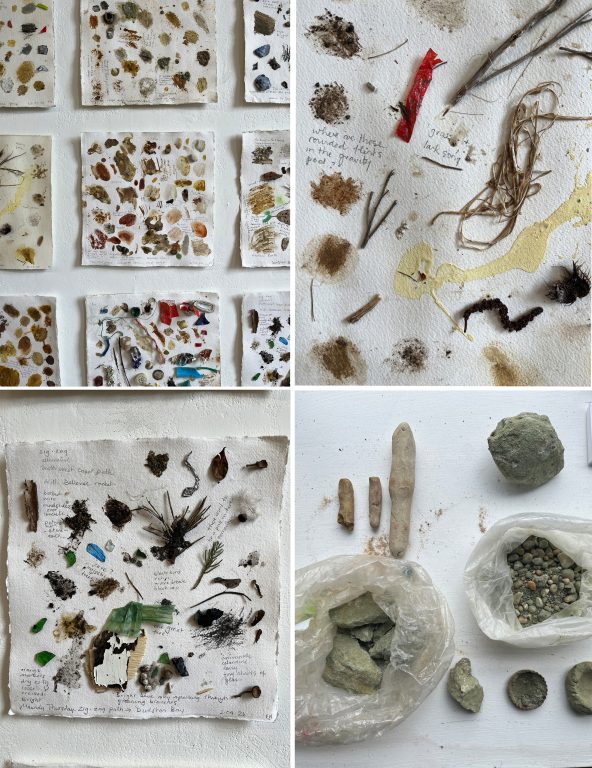
Frances Hatch @Bridport Arts
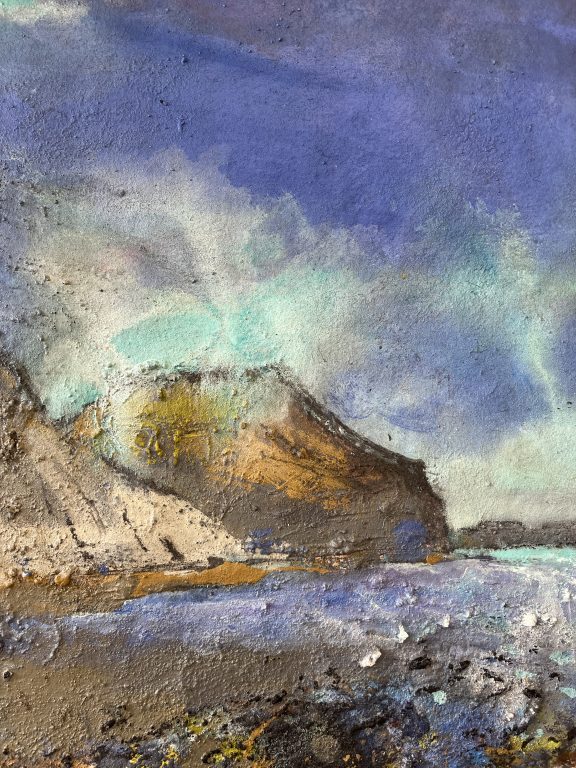
She creates ‘place palettes’ found from the surroundings she’s studying. This can include the earth, grasses, plastics found in litter, beach debris and natural clay.
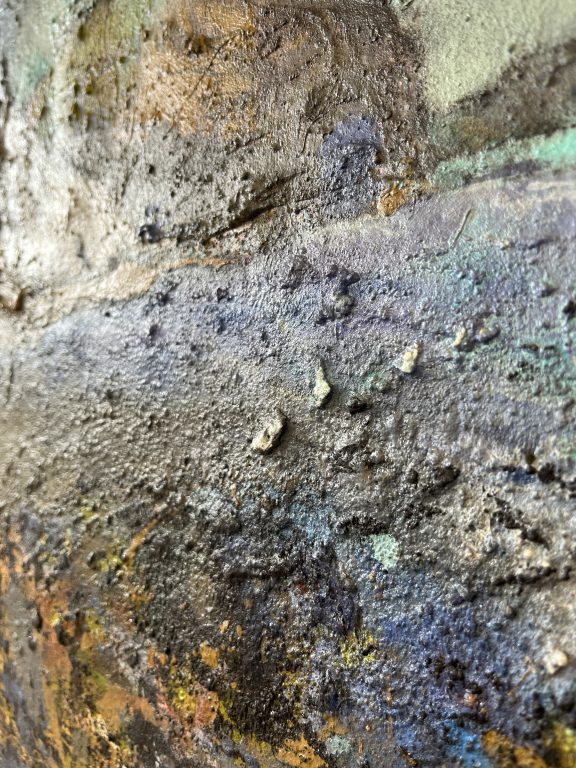
Frances Hatch @Bridport Arts
She then uses these found substances and items alongside traditional watercolour mediums to create highly tactile surfaces which speak highly of the place they were made and of the natural world in general.
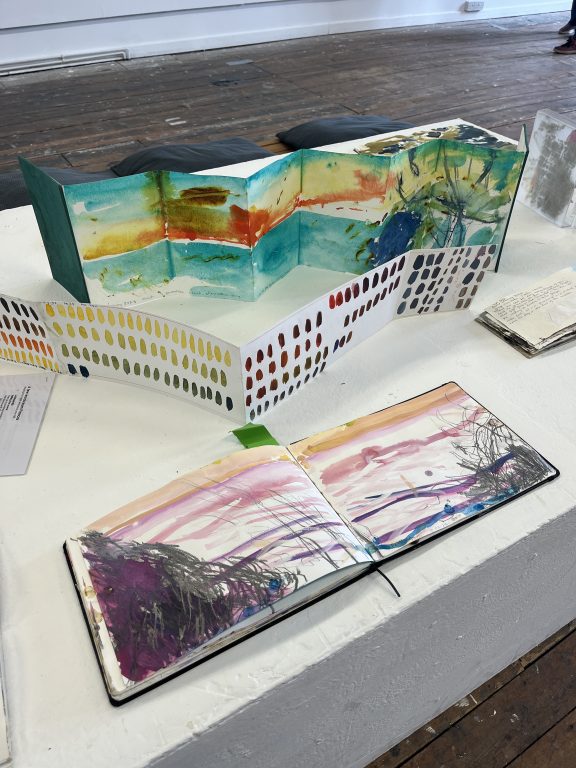
Frances Hatch @Bridport Arts
I love understanding another artists process, especially when it’s as unique and impactful as this. So I was delighted to spend some time leafing through her sketchbooks which clearly spoke of her dedication to subject and process. Very inspiring.
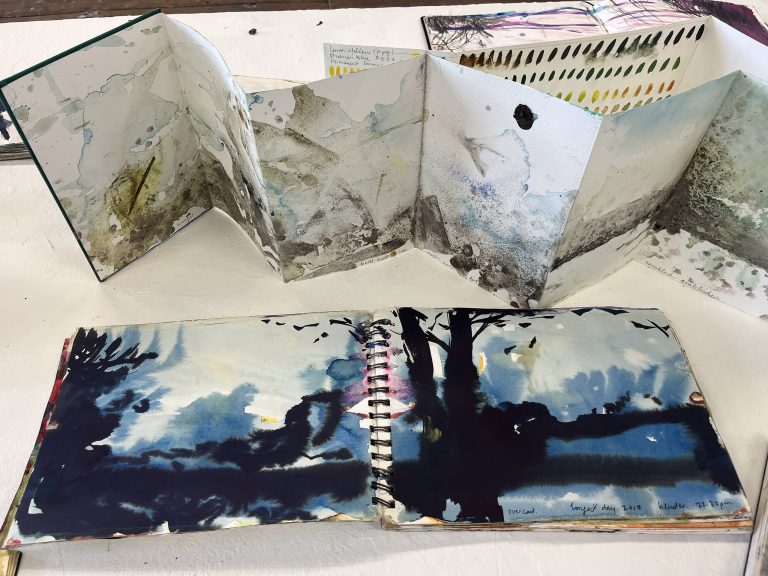
Frances Hatch @Bridport Arts
Cryséde
I’ve been investigating the work of the Cryséde textile design studio since seeing it in the Penlee Museum last year.
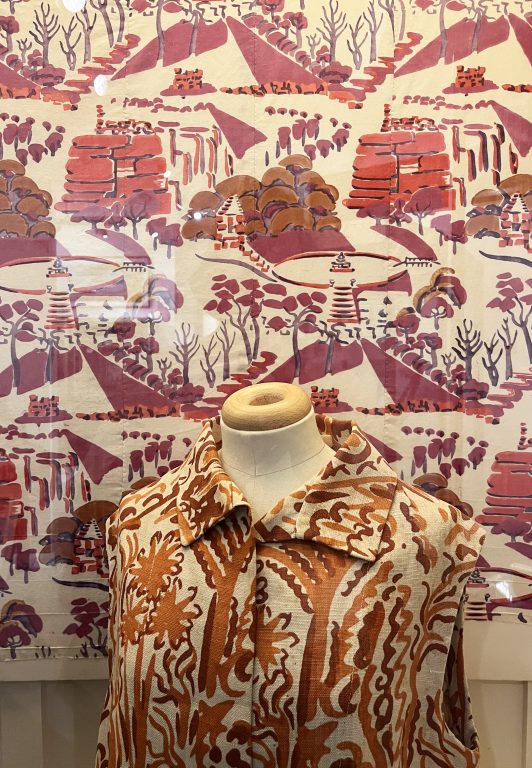
Alec Walker and his wife Kay Earle established Cryséde in Newlyn in the 1920’s, moving then to St Ives and finally, in the 1940s and 50s to Hayle. Self-taught artist Walker designed the patterns which were printed onto silk using a wood block process.
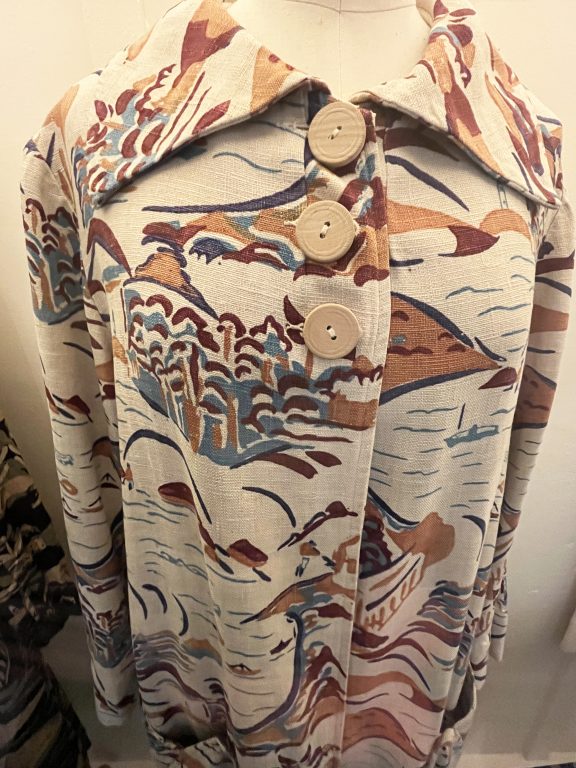
In 1924 Walker visited Paris and met French textile artist Raol Duffy – this inspired him to translate his images of the Cornish countryside into a brightly coloured modern textile language.
This meeting prompted designs such as Zenna Woods, Cornish Farm and Ding Dong Mine. His work proved popular and led to the start of a chain of shops selling bolts and ready to wear garments and a mail order business.
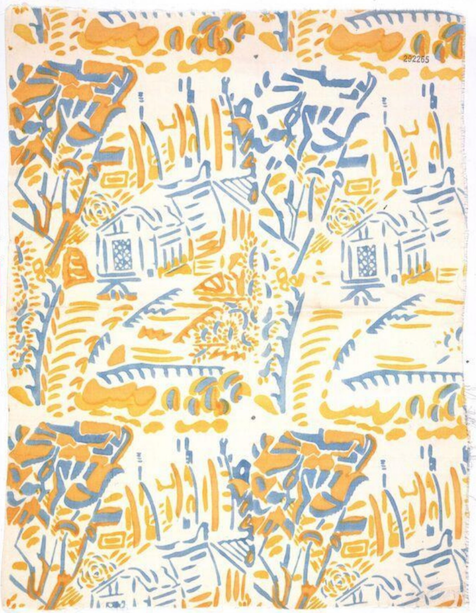
Cryséde Cornish Mine
These were often based on real places, landmarks and people – you can even locate the designs on a map.
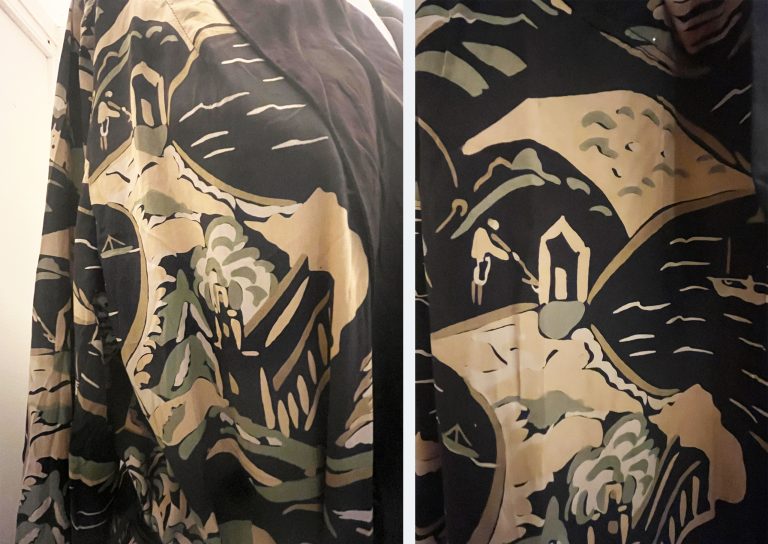
Ding Dong Mine, Penwith pattern
The company was a major Cornwall employer particularly for local women. There was early success which it struggled to maintain and it went into a slow decline, with one partner departing and setting up Cresta Silks in 1929 and the other partner having a nervous breakdown. In addition the 1930’s brought international financial crisis and the war loomed – Cryséde became Cryséde Ltd and hung on with a handful of shops.
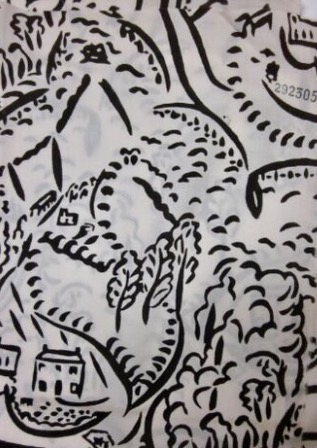
Textile sample
from V&A, manufactured by Cryséde Silks, 1930
In 1946 Cresta Silks bought Cryséde Ltd which in turn was then bought by Debenhams in 1952 with the hand block printing process being replaced by a cheaper screen printing method.
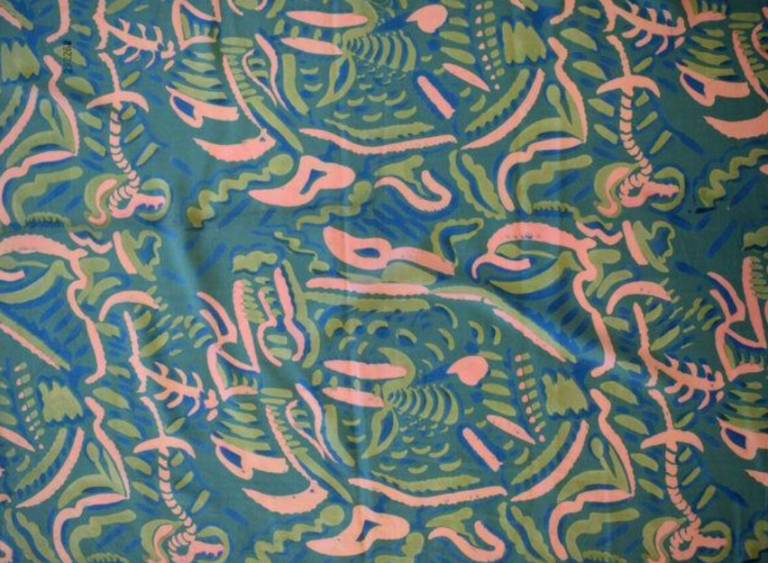
Dress fabric from V&A collection, Cryséde Silks, 1930
I reflect on my own design approach when I discover work from the past which resonates. Below is a fauvist-style painting I did which I then put into repeat as a surface pattern design for sale at Patternbank.
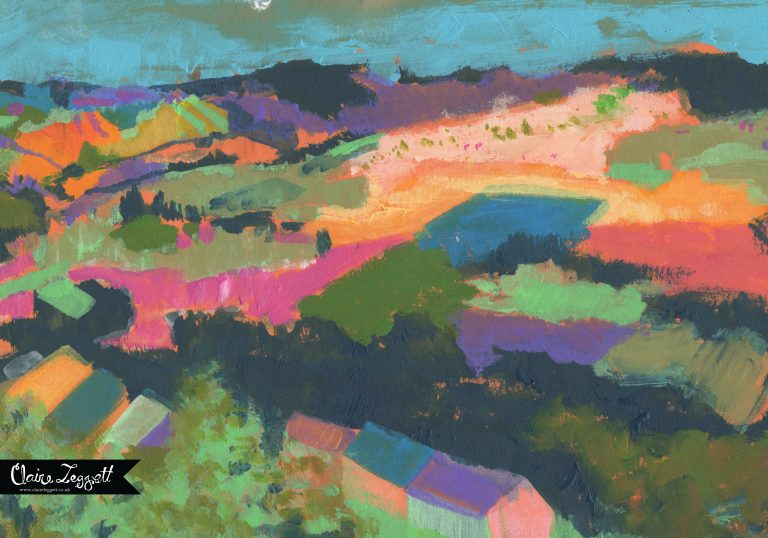
© Claire Leggett Fauve Landscape available at Patternbank
Cryséde repeat designs are lyrical and loose….maybe even simple with obvious repeats which could be achieved by hand blocking – now we have the tools to create complex, invisible repeat drops and transitions, I am left wondering (after days of computer work making this repeat) whether there’s something to be gained by a fresh study of the older ways.
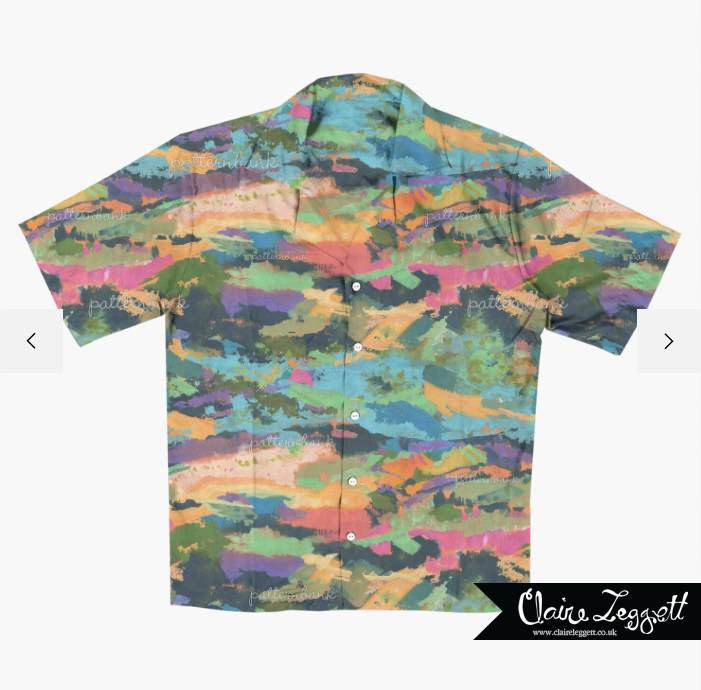
© Claire Leggett Fauve Landscape Shirt available at Patternbank
Embroidered Birds
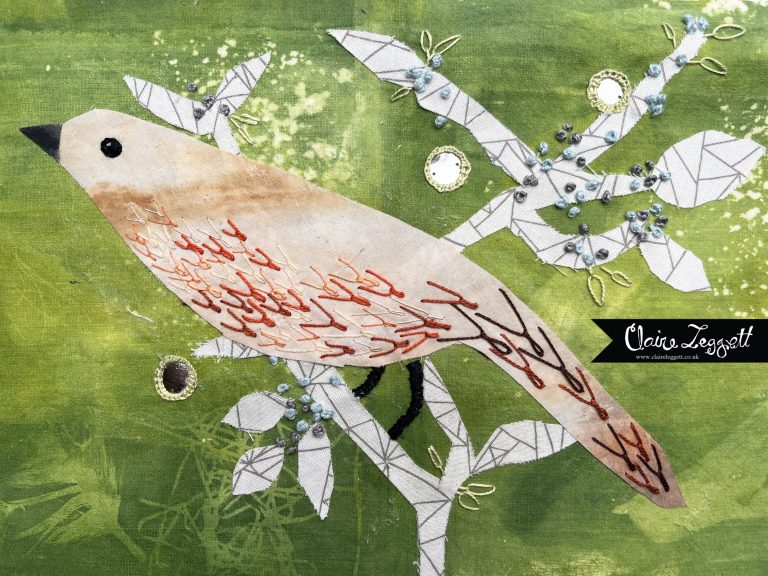
Last month I got the itch to do some textile art, helped on greatly by ‘stitch of the month’ generated by a group I go to.
I think because the first two stitches reminded me of feathers, I decided that I’d make the beginnings of a stitched fabric bird book.
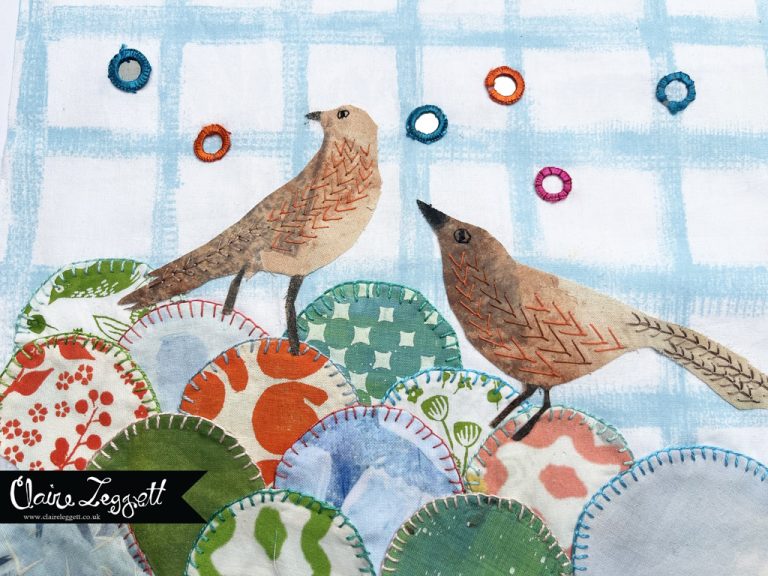
The first stitch (top) is Oxhead stitch and the second (above) is Y stitch. This latter piece started life in a day class run by Maria Thomas featuring her signature use of scallop shells. I didn’t realise at the time what I was beginning or where it would find it’s purpose – a good lesson in playing open-endedly as a creative.
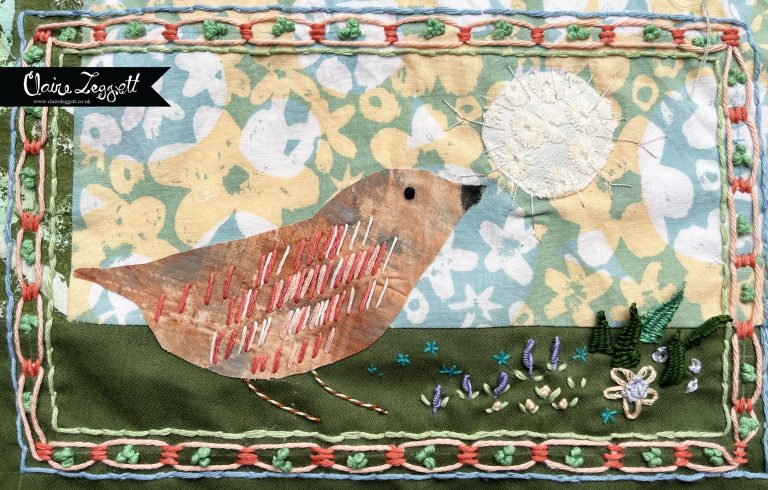
This last one is Gobelin stitch (this bird does indeed look like he’s been ‘gobblelin’ a lot of something!)
Ono Chikkyo
Back in 2024 we took a trip to Japan where I discovered not only a whole non-European approach to thinking about and making art, but also this specific artist; Ono Chikkyo.
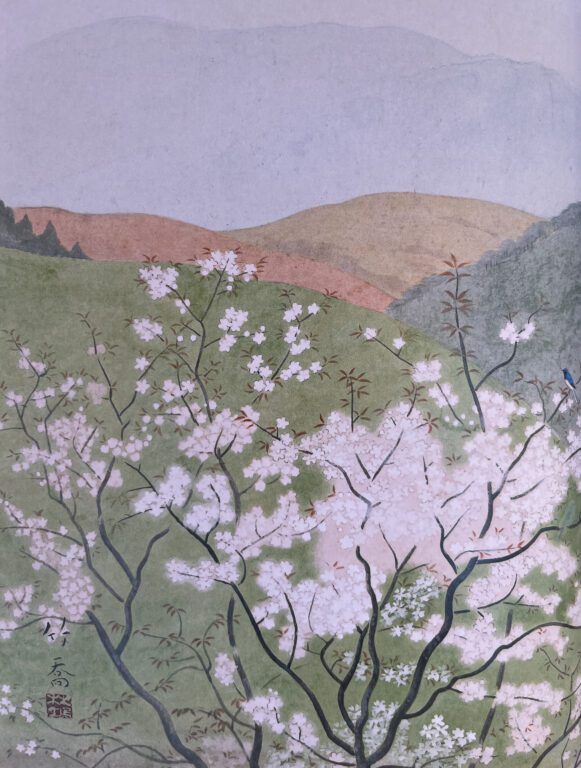
Ono Chikkyo
He was a important 20th-century Japanese painter known for his refined nihonga (traditional Japanese-style painting) landscapes. This style was known for balancing realism and poetic atmosphere.
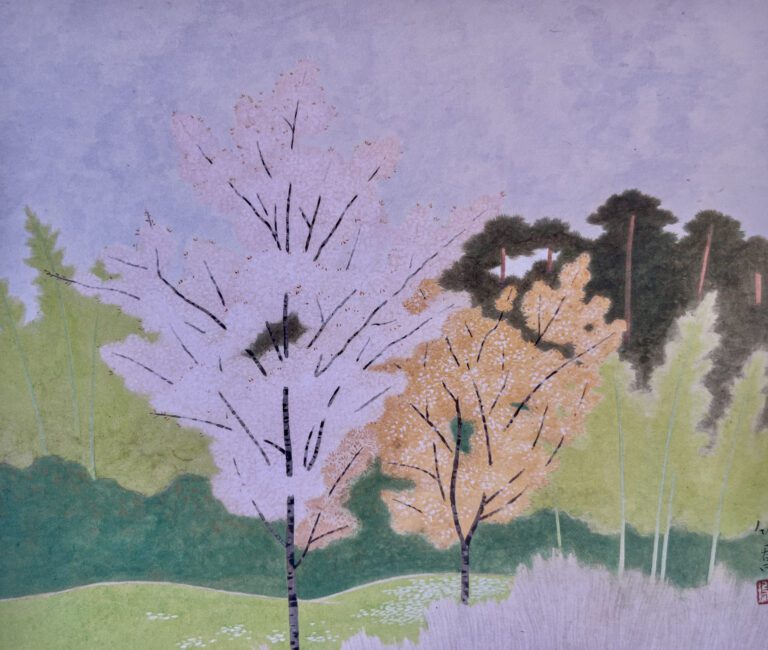
Ono Chikkyo
He was born in 1889 and apprenticed at 14 to Takeuchi Seihō ( a leading nihonga master ) to study traditional Japanese painting techniques.
He exhibited and won awards until he died in 1979 leaving behind an important legacy in Japan as a significant figure; preserving and advancing traditional Japanese painting during rapid modernisation.
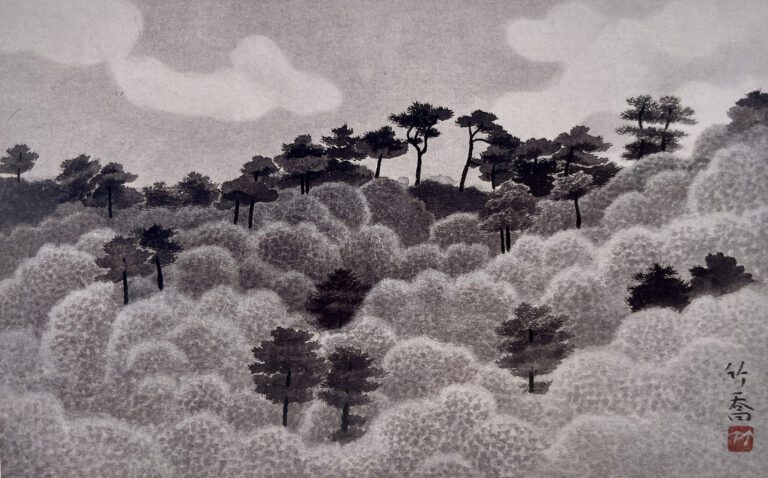
Ono Chikkyo
As an artist he sought to have an honest and in a dialogue with nature ;
“An honest heart, a pictorial charm and honest dialogue between nature and myself this is what I wish to focus on”.
I see this in his compositions, for example when he crops into a small patch of tree top and sky.
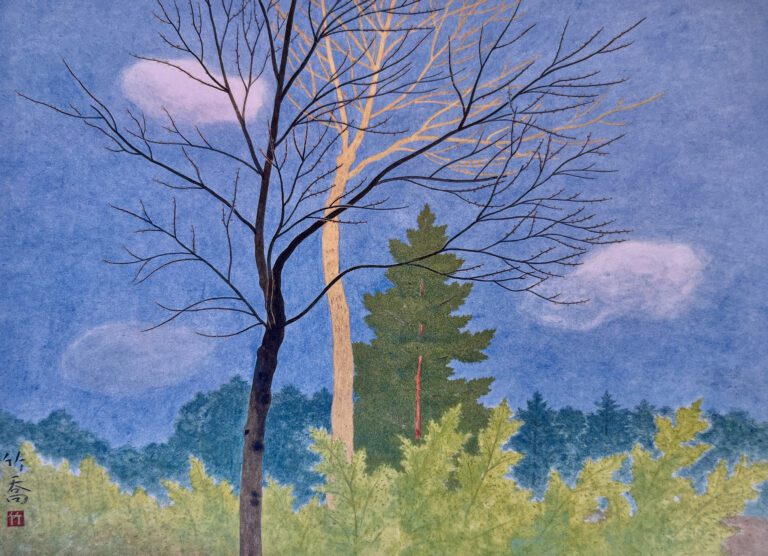
Ono Chikkyo
He used Sumi ink and natural pigments on Washi paper or silk. These materials helped create the soft luminous colour which first grabbed my attention as they appear an incredibly modern palette of colours. The natural pigments sit on the surface of the paper which gives the crisp finish to his line-work.
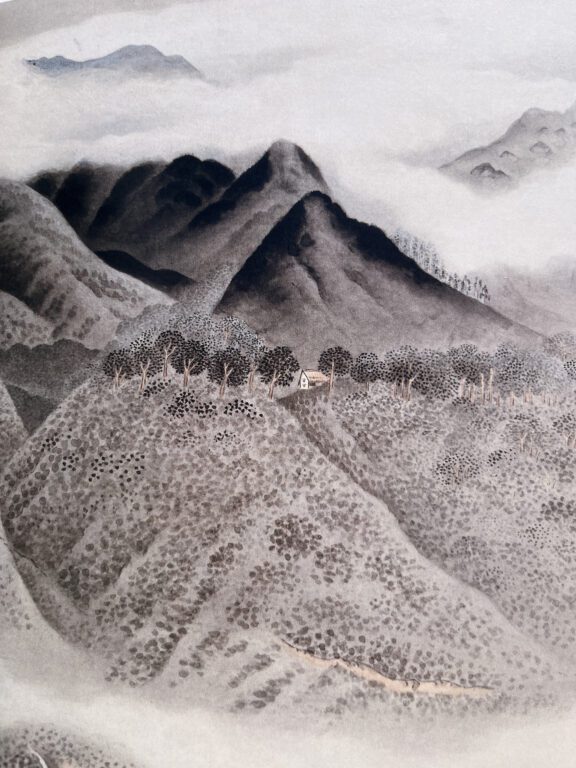
Ono Chikkyo
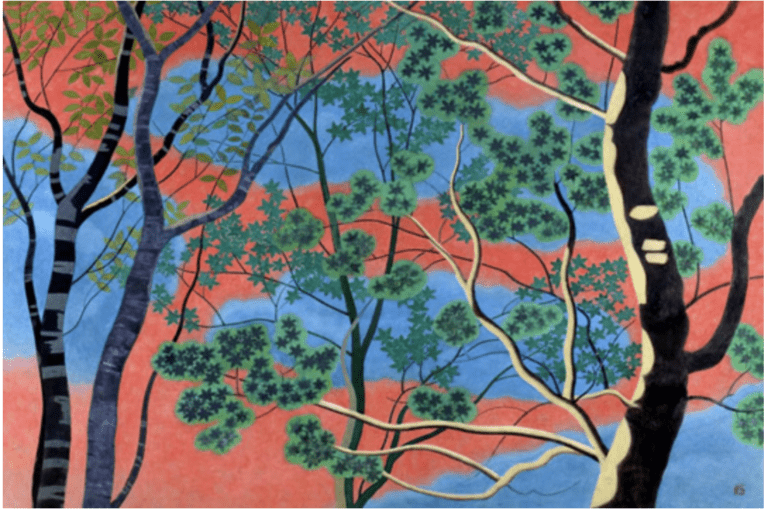
Ono Chikkyo
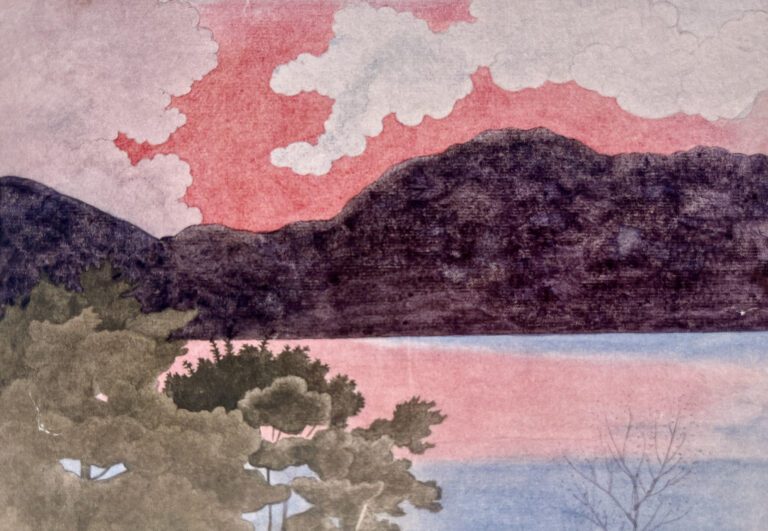
Ono Chikkyo
Nested with needle & thread
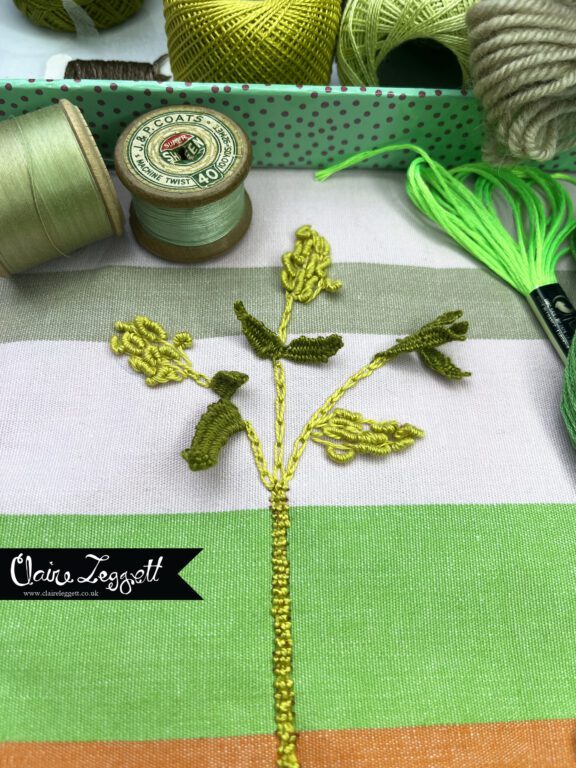
I sat out the very wet, muddy end of February cosied up inside in a little nest of needle and thread.
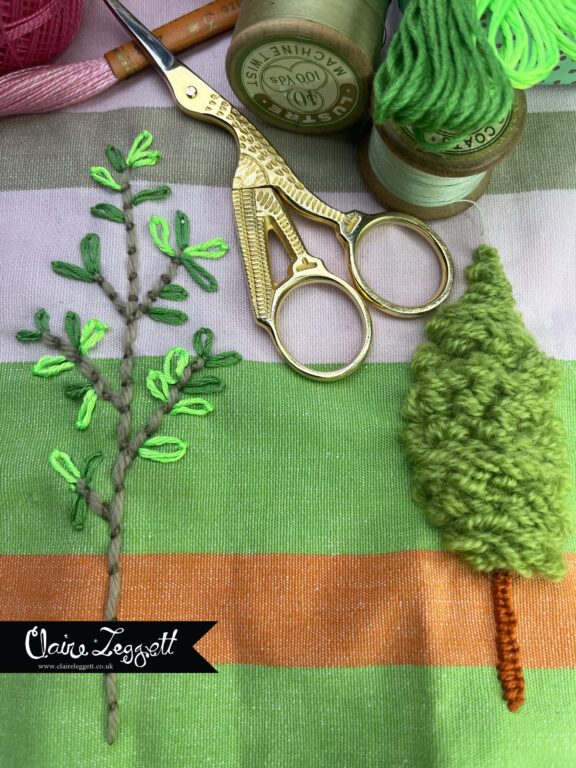
I was focussing on prepping samples for Threaded Trees at Winterbourne House & Garden and found myself happily revisiting my love of illustrating and embellishing with needle and thread.
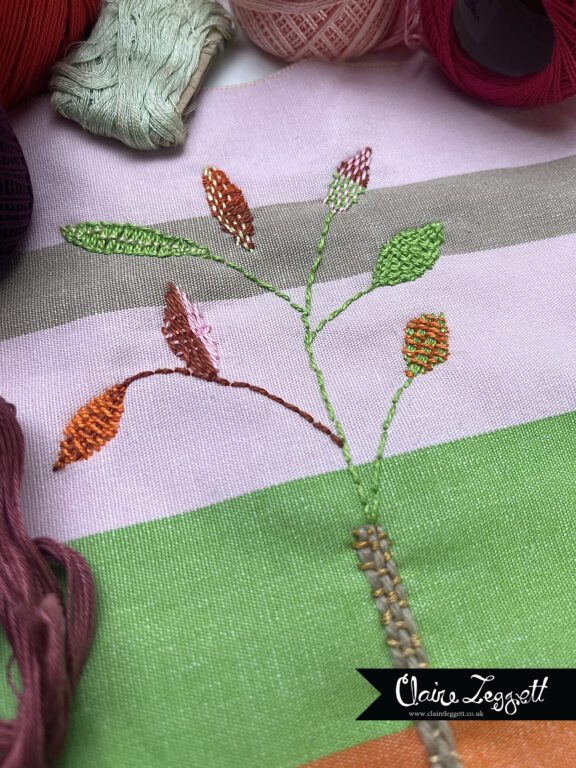
When I do a talk for groups, I often mention the importance of play, of making in an open-ended way, of changing up a style, a use of material or approach – it’s always good to benefit from your own words of wisdom and I’ve really enjoyed switching materials and working with something non-paint for a while.
Birmingham Embroidery Textile Art group
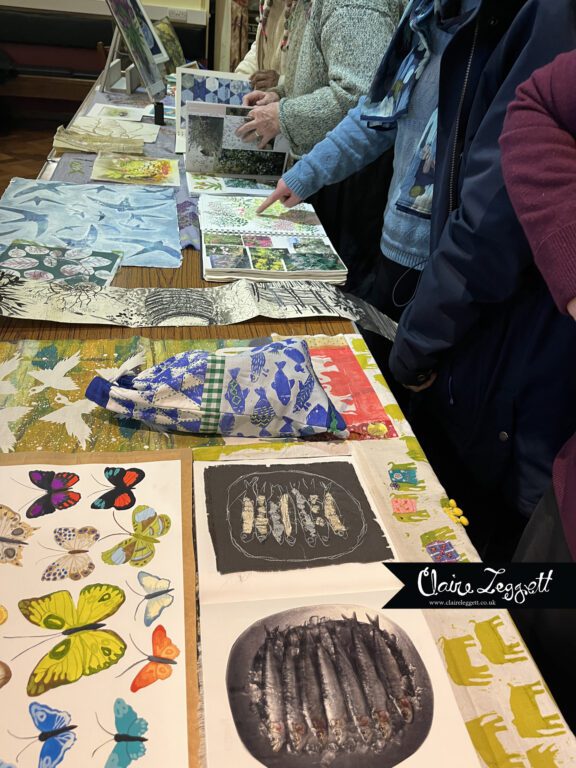
I had the pleasure of giving a talk about my work at Birmingham Embroidery Textile Art group recently.
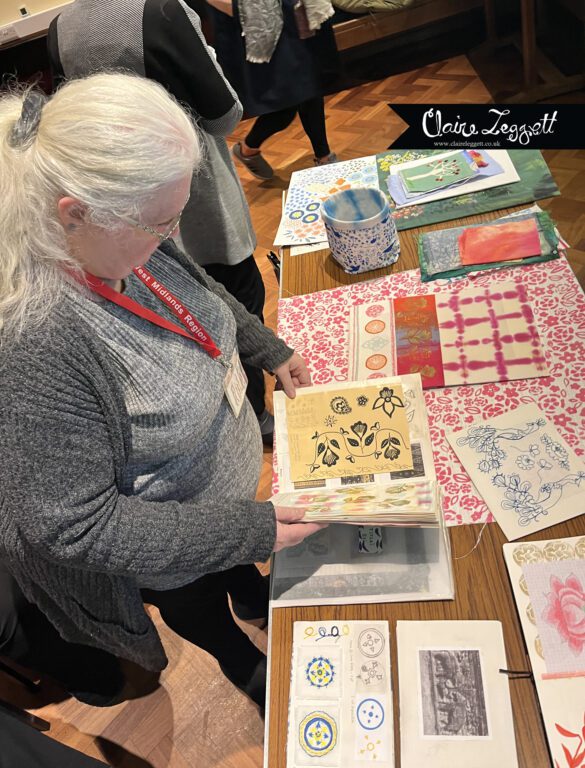
BETA is full of very talented textile artists and sew-ers; they enjoyed hearing about how I translate my painting work through into textile art and embroidery.
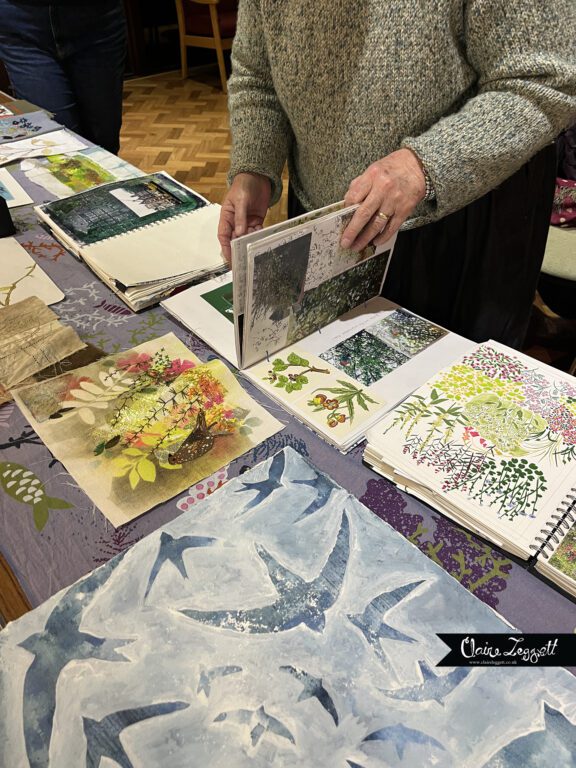
I also explained my surface pattern design process and how pattern makes it’s way into everything I do.
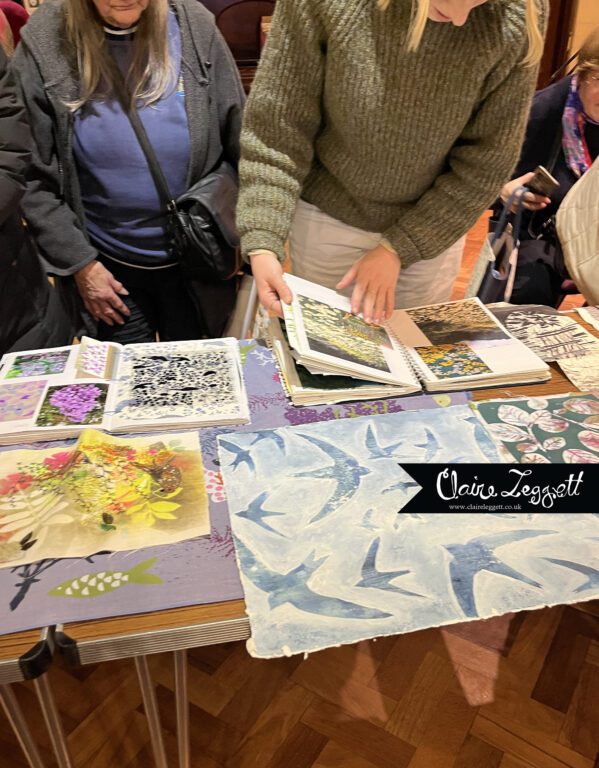
A group like this also loves a sketchbook which is very pleasing to me – a lot of my sketchbooks are teaming with textile and embroidery development work that no-one really ever see’s so it was very gratifying to notice people combing through them.
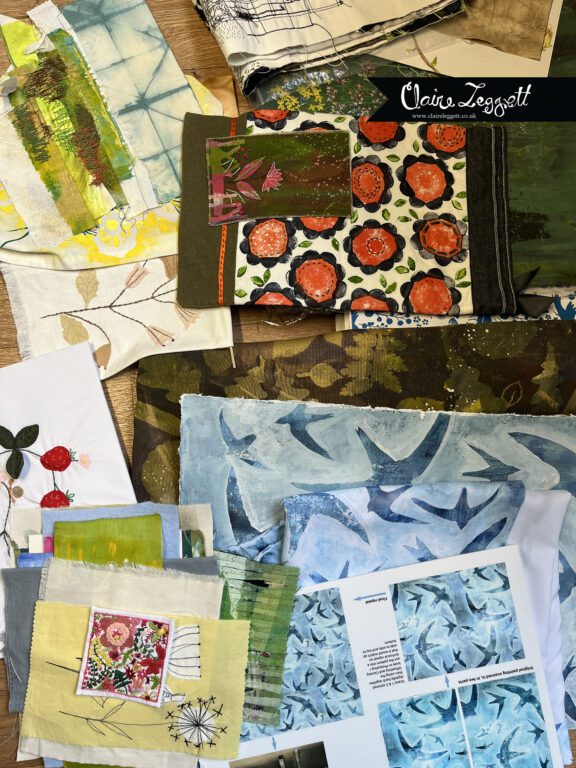
Looking through all my past work reunited me with some of my textile past and re-lit a small flame to do more sewing again.